Say a salon owner spends a few lakhs on an app, mostly because the shop down the road got one. Eight months later, it has 140 downloads. Her regulars still message her on WhatsApp to book. Why wouldn’t they? It’s quicker. Here’s the thing about mobile app development services. They can pay back many times over and also turn into a monthly bill for something nobody opens. Which one you get has surprisingly little to do with code.
Do You Even Need Mobile App Development Services?
Sometimes no. A lot of businesses are okay with a mobile website. People search for you, scroll a bit, look at prices, and call. A fast site takes care of all that. Is much cheaper to maintain.
An app really starts paying off when people open it again and again, or when it can do something a website just can’t. Push notifications are the obvious one. So is working with a patchy signal, using the camera, tracking someone’s live location, or remembering a saved card.
Signs You’re Ready for
People already come back often
Bookings, reorders, memberships, deliveries. An icon on the home screen earns its spot only when it is used every week or every week. Look at your phone. Five or six apps are opened each day.
Say what it does in one line
Book a slot in two taps. Where’s my order? Reorder weekly stuff. Needing a paragraph? Then the ideas get fuzzy.
The basics already run smoothly
A slow mobile site or a chaotic order process doesn’t get cured by an app. It just moves to a smaller screen, and for that you need mobile app development services.
Money is set aside for after launch
Phone update. Bugs appear. Servers cost something every month. If you only budget for launch, month six gets ugly.
Signs You Should Wait
You want it mostly because a rival has one. No one can say what problem it solves, and the core process is still messy offline. You expect downloads to arrive on their own. Or the whole budget goes on the launch with nothing left behind it.
Native, Cross-Platform or Web App?
You’ll hit this question early. A decent team can explain it without jargon, and if they can’t, that tells you something.
Native apps
One app for Android, another for iPhone. They feel the smoothest and can use every feature on the phone. You also pay for two builds and keep two codebases alive. Games, heavy graphics, and very demanding apps are where this makes sense.
Cross-platform apps
One codebase, both platforms. For most business apps (bookings, shopping, service tracking), this is where I’d start. It’s faster and cheaper, and if the app takes off, you can go native later.
Progressive web apps
It’s basically a website that looks like an app. It’s an option. It works fine for simple content or basic tools. It can’t access all the features on your phone. It doesn’t work as smoothly on iPhone devices.
What Good Mobile App Development Services Should Include
Watch out for any provider whose pitch is only about coding. A proper project has more stages:
- Discovery, where you agree on goals, users, and what stays out of version one
- Design, with screens tried on real people before anyone writes code
- Development, covering the app and the server behind it
- Testing on different phones and OS versions, not only the developer’s own handset
- Store submission, which has its own rules and delays
- Support once it’s live
If a proposal skips testing or support, ask why. That’s usually where corners get cut.
Mistakes That Sink App Projects
- Cramming in every feature at once is the classic. Version one should be smaller than feels comfortable.
- Skipping feedback is another. Put a rough prototype in front of a few real customers before building. Ten minutes with them will tell you things a month of planning missed.
- Choosing purely on price, too. The cheapest quote tends to leave out testing, support, or both, and you find that out when something breaks.
- The missing launch plan. An app nobody hears about might as well not exist.
How to Choose a Mobile App Development Company in Mohali
When you’re comparing the best mobile app development services in Mohali, a few plain checks save a lot of grief.
Ask to see apps they’ve actually shipped, then go and download a couple yourself. Poke around. Does it feel quick? Does it crash? Next, ask whether they’d go native or cross-platform for you, and why. What you’re listening for is an answer that mentions your business, your customers, your budget. If it sounds like something they’d say to anyone who walked in, that’s not the one.
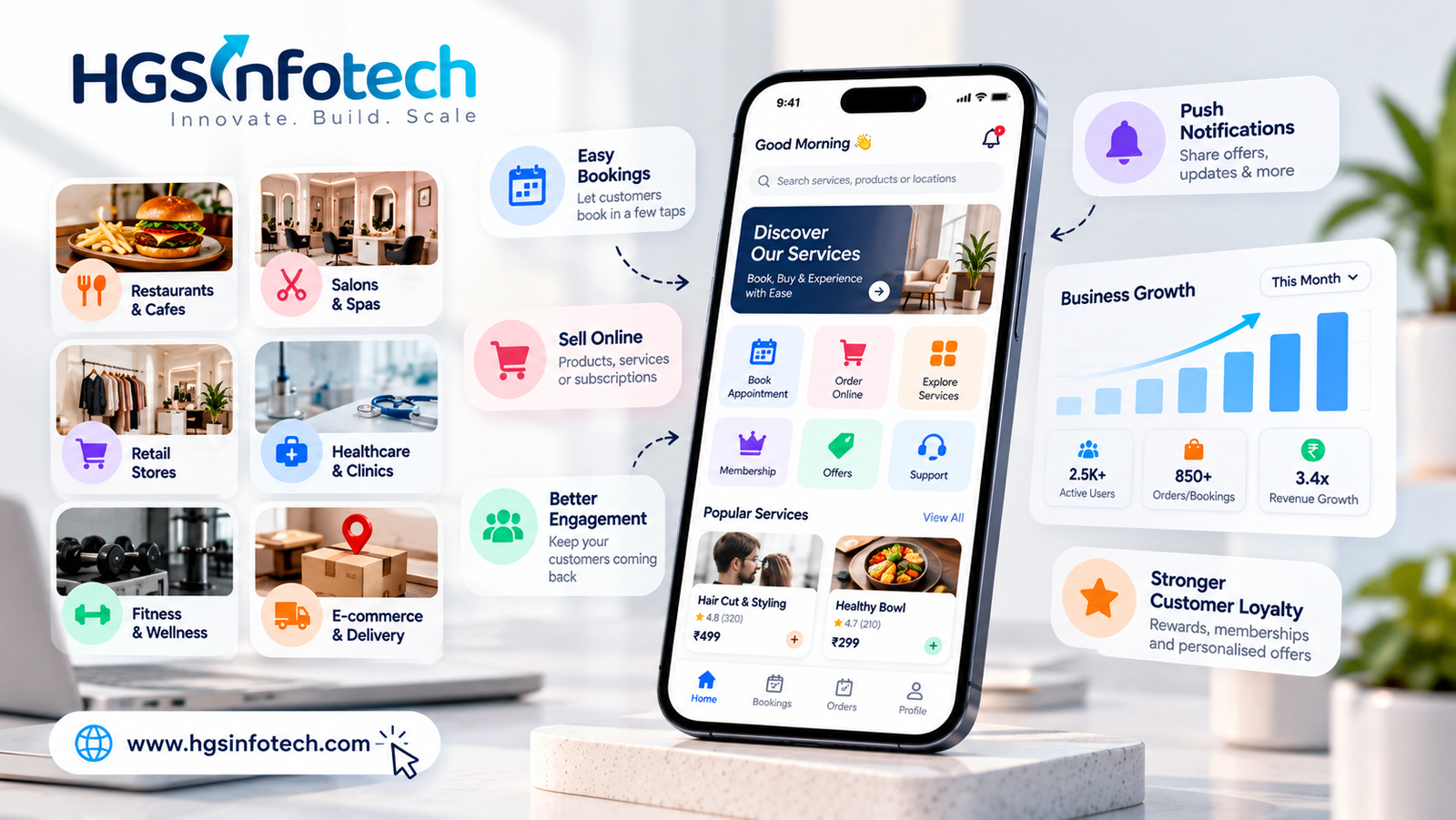
That last one is how we work at HGSInfotech. A clinic’s booking app and a restaurant’s delivery app need very different things, and a team that starts from the customer usually ends up building something simpler that people actually use. Our mobile app development services page explains how we go about it.
Final Thoughts
So how do you know? Mostly it’s a gut check on a few things. Do people already use you every week or so? Can you describe the app in one sentence without waffling? Does your website or booking process work properly right now? And is there a plan for getting people to install it, plus some money left over for fixing things after launch? If you’re shaking your head at most of those, don’t rush. Improve the website, or build a tiny first version and see what happens.
Suppose you’re going ahead. Pick a team that wants to know who your customers are before it talks about features. One that tells you straight what each option will cost, even when the answer is awkward. And one that’s still answering your calls half a year after the app goes live. Honestly, that matters more than whatever’s on their feature list. For the best mobile app development services, it’s the real test.